EDITORIAL We are approaching the end of 2025 and one of this year’s buzzwords has been Artificial Intelligence (AI), so I have thought of making an experiment and asking Google which
developments in transport are going to happen in 2026. In line with the AI increasing popularity, I have chosen to focus on the AI-generated results only as they now appear at the top page of search results. |
|
WEBSITE OF THE MONTH The "Website of the Month" is a spotlight
feature in our email newsletter, where we showcase a standout website, recognising its exceptional tools, valuable resources or content. |
|
| The United Nations
Environment AssemblyThe UN Environment Assembly is the world’s highest-level decision-making body for matters related to the environment. It sets priorities for global environmental policies and international environmental law. Understanding these
challenges and preserving and rehabilitating our environment is at the heart of the 2030 Agenda for Sustainable Development. |
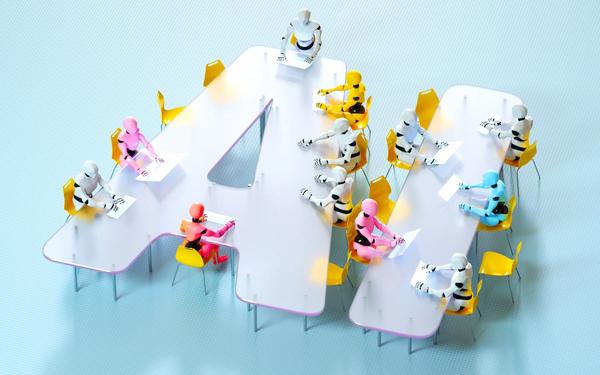
The next frontier in AI isn’t just more data For the past decade, progress in Artificial Intelligence has been measured by scale: bigger models, larger datasets, and more compute. That approach delivered
astonishing breakthroughs in large language models (LLMs); in just five years, AI has leapt from models like GPT-2, which could hardly mimic coherence, to systems like GPT-5 that can reason and engage in substantive dialogue. And now early prototypes of AI agents that can navigate codebases or browse the web point towards an entirely new frontier. But size alone
can only take AI so far.
The UK is going to rejoin the Erasmus+ programme in 2027 Erasmus+ is an EU programme that provides grant funding for international placements and partnership projects for organisations working in education, training, youth and sport. It aims to helps people improve their education, gain work
experience, and grow personally by offering chances to study, learn and work in eligible countries. Erasmus+ is open
to learners, trainees and staff in higher education (HE), further education (FE), vocational education and training (VET), schools, adult education, youth and sport.
|
A sustainable future requires new thinking: UN environment report
“The Global Environment Outlook lays out a simple choice for humanity: continue down the road to a future devastated by climate change, dwindling nature, degraded land and polluted air, or change
direction to secure a healthy planet, healthy people and healthy economies”, said UNEP Executive Director Inger Andersen. The report makes a case for interconnected ‘whole-of-society’ and ‘whole-of-government’ approaches to transform economy and finance, materials and waste, energy, food and the environment.
It has input from 287
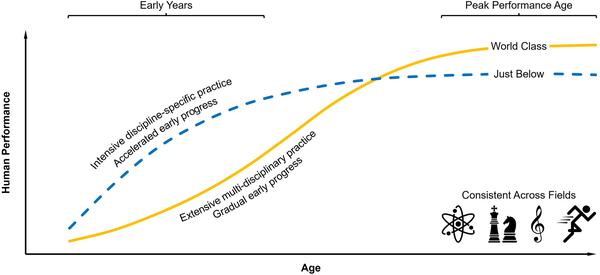
multi-disciplinary scientists from 82 countries and stretches to well over 1,000 pages. Recent discoveries on the acquisition of the highest levels of human performance Exceptional performers push the boundaries of human capability, drive innovation, and help solve the world’s most pressing problems. For decades, research on the acquisition of human performance across
domains (e.g. science, academia, music, sports, and chess) has primarily been conducted with young and sub-elite performers. This research suggested that higher early performance and larger amounts of discipline-specific practice generally are predictors of better later performance. |
|